
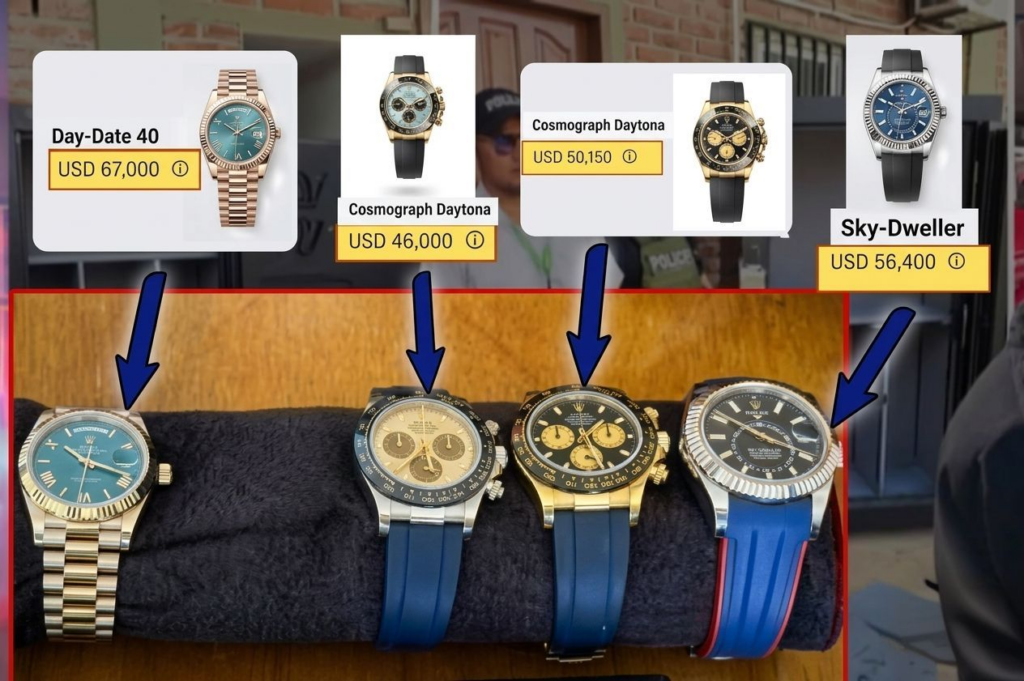
The operation to capture Marset was carried out by the Bolivian Police, who had direct control of the raided properties. It is at this stage where the main doubts emerge, as there is still no detailed public report outlining what assets were found, recorded, or seized.
Within that information gap, journalistic investigations have pointed to the possible existence of luxury watches—some reportedly worth millions of dollars—that do not appear in any subsequent records. Without an official inventory or a clear chain of custody from the outset, these claims, while unconfirmed, are gaining traction in public debate.
The issue is not only whether these items existed, but the lack of institutional transparency to clarify it. Neither the Ministry of Government nor the Public Prosecutor’s Office of Bolivia have provided a full account of what occurred during the initial operation, leaving room for growing concerns about the integrity of the procedure.
Only later, during the opening of the safes, was a more controlled process observed, with prosecutorial presence. The result was striking: no money, no documents, no valuables—just empty compartments that contrast sharply with the scale of the case.
The Marset case is no longer just about what was found, but about what is missing. First the watches, now the empty safes. Between those two points lies a gap with no clear explanation. And in that space, doubts are not only growing—they are taking shape.
Cover image courtesy of DTV.


About Author
