
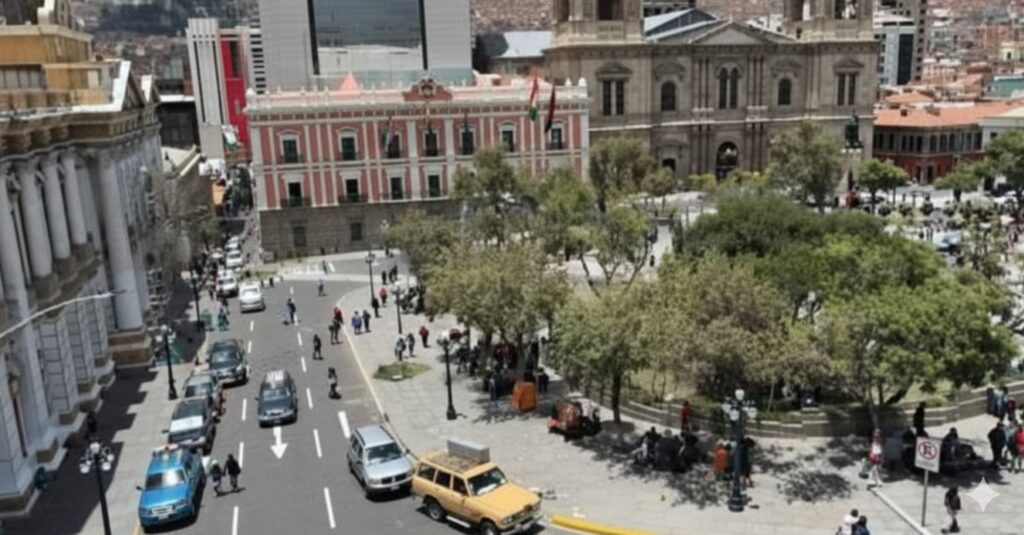
Under the thin air of the Andes, Bolivia holds its breath. Streets around Plaza Murillo are sealed off, soldiers stand in ceremonial precision, and the city hums with quiet expectation. In just hours, Rodrigo Paz will be sworn in as president —a moment seen not only as a transfer of power but as the possible rebirth of Bolivia’s political balance.
Five presidents have already confirmed attendance: Javier Milei (Argentina), Santiago Peña (Paraguay), Gabriel Boric (Chile), Daniel Noboa (Ecuador), and Yamandú Orsi (Uruguay). Their presence, crossing ideological lines from right to left, frames this inauguration as a rare show of regional respect toward a nation seeking democratic steadiness after years of turmoil.
Convoys glide through El Alto’s chilly night, escorted by flashing sirens. Inside downtown cafés, foreign journalists debate the symbolism of Paz’s arrival —some see it as a bridge between fractured generations, others as the start of a caut deious experiment in coexistence. What no one denies is that Bolivia’s political gravity has shifted: the once-dominant MAS party now sits in decline, replaced by new forces —PDC, Libre, and Unidad— shaping a multipolar legislature.
There’s no triumphalism in the air, just a collective exhale. Bolivia isn’t celebrating; it’s recalibrating. As one local told near San Francisco square: “This time, we just want peace to mean something real.”
Tomorrow’s ceremony will echo beyond the palace walls. Whether Paz becomes a unifier or merely a manager of expectations will depend on how he navigates the fragile bridge between institutional power and public patience. For now, Bolivia waits —and the world watches.
Central editorial office La Paz
Cover courtesy of Unitel


About Author
